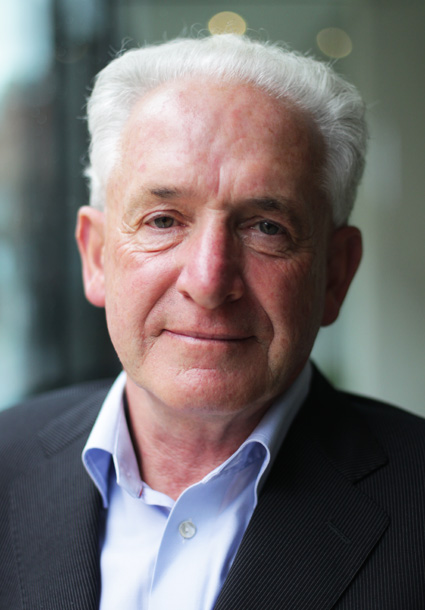
It is now almost fifteen years since I was forbidden to exercise priestly ministry, and I am on the verge of my eightieth birthday. The issues around which I was forbidden to minister were my writings on such matters as priesthood, women’s equality, and aspects of Catholic sexual teaching.
As a Redemptorist, I had spent all my years of ministry mainly in preaching. That year, in which I was in conflict with the Vatican and my Redemptorist authorities, was not easy, but was life changing. In the end I was faced with a stark choice. Either I publicly renounce the views I had long held and written about, or I was ‘silenced’. I had to make a decision. How could I live with myself if I publicly stated the opposite to what I believed?
Ironically, now, with open discussion in the Church during the Synodal Process, the views for which I was dismissed are widely expressed, and positively ‘middle of the road’ among many Catholics, if not yet in the Vatican.
These years have been good to me. I was free from the constraints of ancient Church dogma, and the necessity of remaining at least generally, within the official line. I began to delve more deeply into the Gospel message, and how it relates to modern scientific discoveries. This has led me to re-think a couple of fundamental things at the core of Church teaching since the early centuries.
Where is that leaving me now?
First of all, I no longer believe I a God in ‘the mansion in the skies’. The Divine Presence is at the heart of creation from the very beginning many billions of years ago, and ‘in God we live and move and have our being’, and so does all that exists. The creation story in Genesis, like a great deal of the Bible, is not historical, but mythological story telling. This does not mean that the Bible is untrue or unimportant. In dealing with the world of mystery, (and in relation to the Divine Presence we are surrounded by mystery), myth and storytelling are often the best way to give us an entry into that world. But, to base dogmas on a literal interpretation of Genesis is not credible, and completely misunderstands the way in which the Scripture writers communicated their message which was often done through poetic imagery. Unfortunately a lot of fundamental Church doctrine is based on this misunderstanding, for instance, the nature of God and his relationship with humanity, the Garden of Eden, Original Sin, and many others. They are now open to question, though the Church is not partial to this and, as a consequence is in danger of being left behind.
Possibly the biggest question this raises is who exactly was and is Jesus. I don’t accept that he was sent from Heaven to reconcile us with God, since God was never, and never could be, apart from creation. And since the Divine Presence is within each one of us, I can no longer say that Jesus is ‘the only Son of God’ in the exclusive sense that is usually presented. It can, I believe, be said of all of us that we are daughters and sons of God. But what I can say about Jesus is that he was a unique revelation/manifestation of the presence of God in the world. Understanding his life in that way gives his message a whole new and more powerful resonance. To ‘follow Jesus’ means most of all to open ourselves to the awareness of Divine presence as he did, and as he manifested in his life and death. And if his death was not necessary in order to placate an angry God and open the gates of heaven what can we say about it? For me, it puts the focus back on his message, since the radical and challenging nature of how he lived and what he said was the reason the civil and religious authorities turned against him and crucified him.
As the late, lamented Scripture scholar, Kieran O’Mahony, stated clearly, Jesus did not found a church. He lived and died a Jew. But the Church has taken possession of him in a way that I now believe has greatly curtailed the strength and beauty of his message. It asserts that we can only be saved through Christ, that he is the only pathway to salvation. I believe that teaching would be foreign to the Jesus who lived two millennia ago. It is a teaching that excludes people from God, and is the basis of so much of the power claimed by the Church. The Church does not possess or own Jesus. His fundamental teaching is much more life giving and liberating than that which any church dictates in dogmas.
Whoever lives in love, lives in God as The God lives in them.
I am well aware that in some of what I have written above I am deviating from great scholars of the early Church. But I have come to believe something that was best put, in my experience, by Czech theologian Tomas Halik who says that all statements, writings, even dogmas, are time bound and speak out of the knowledge and understanding available in each era. Future generations will need to do the same with the ideas prevalent today. It is, in my view, a mistake to present knowledge from the third and fourth centuries as infallible for all ages.
But I certainly wouldn’t want to dismiss the wisdom of the great scholars of the Church. For instance:
‘You have made us for yourself, O Lord, and our hearts are restless until they rest in you’. Augustine.
‘All things pass away; God remains unchanged’. Teresa of Avila
Let’s cherish the wisdom, but allow the doctrines to develop.